


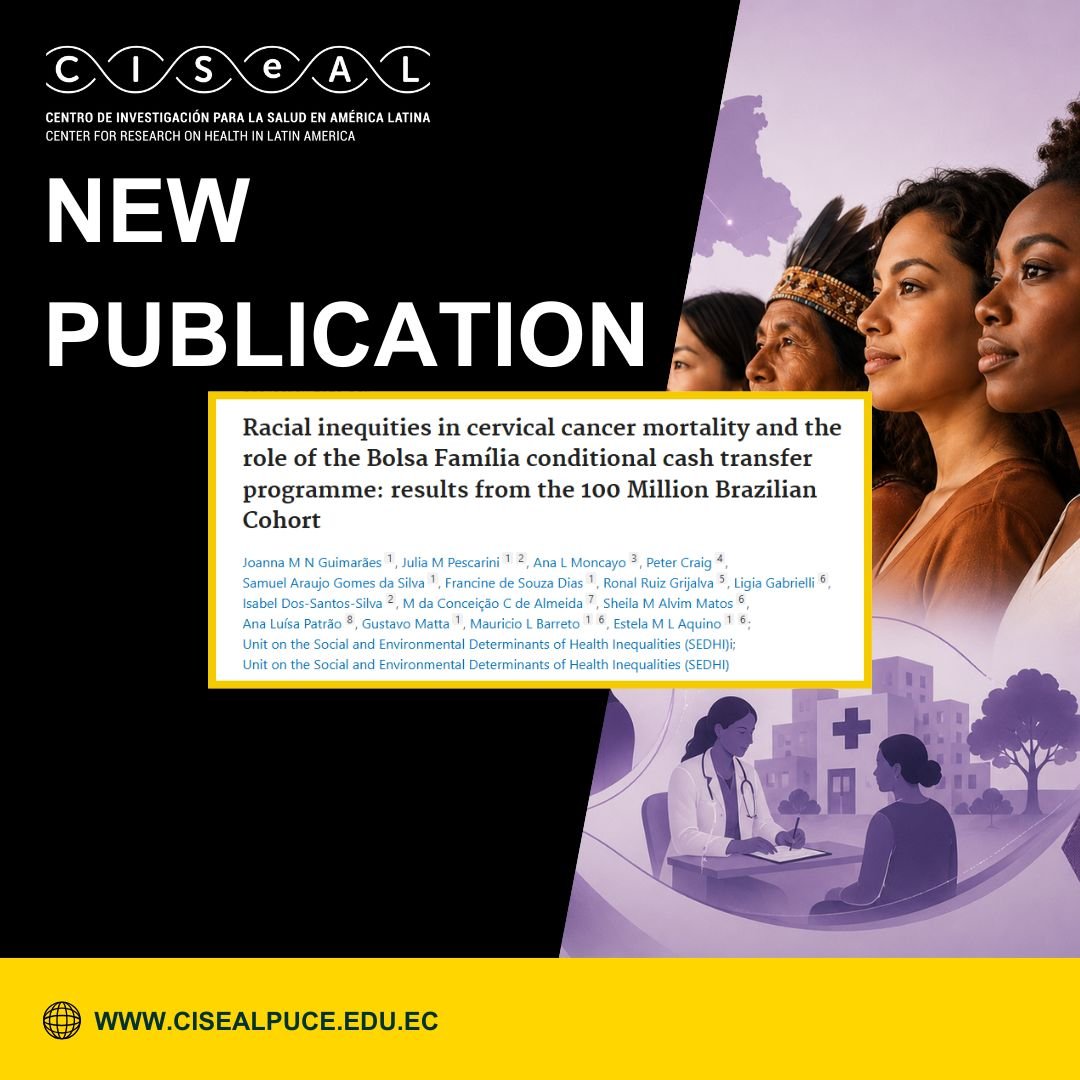
 A study featuring the participation of Dr. Ana Lucía Moncayo, a researcher at CISeAL, analyzed racial inequalities in cervical cancer mortality and the potential role of the Bolsa Família conditional cash transfer program in reducing these gaps in Brazil. The study used individual data from the 100 Million Brazilian Cohort, a national administrative cohort linked to mortality records, which made it possible to analyze 18,291,600 women aged 18 to 100 during the period 2004–2015. The results showed significant differences in cervical cancer mortality by race, even after adjusting for age, education, place of residence, year of entry into the cohort, and participation in Bolsa Família. Indigenous women had the highest mortality rate, with a risk 78% higher than that observed in white women, followed by Asian (55%), mixed-race (pardas) (28%), and black (20%) women. One of the main findings was that participation in Bolsa Família modified the magnitude of these inequalities: among beneficiaries, black, mixed-race, and indigenous women experienced 12%, 25%, and 74% higher mortality than white women, respectively, whereas among non-beneficiaries, these disparities increased to 53%, 36%, and 98%, respectively.
These results suggest that social protection policies can help reduce racial health inequities by improving economic conditions and facilitating access to health services, including preventive actions such as HPV vaccination and cervical cancer screening. The study also highlights the particular vulnerability of indigenous women and the need to address structural and institutional barriers that condition their access to timely prevention, diagnosis, and treatment. Although its observational design does not allow for establishing causal relationships, and there are limitations related to the availability of information on income, access to health services, and clinical variables, the findings provide relevant evidence to guide public policies aimed at reducing racial inequalities in cervical cancer. The authors suggest that strengthening affirmative action, reducing institutional racism, and considering the incorporation of HPV vaccination and cervical cancer screening into the conditionalities of social programs like Bolsa Família could help advance toward greater health equity.
Can social protection policies become a tool to reduce racial inequalities in health? Discover the complete results and analysis of this research in the article: