


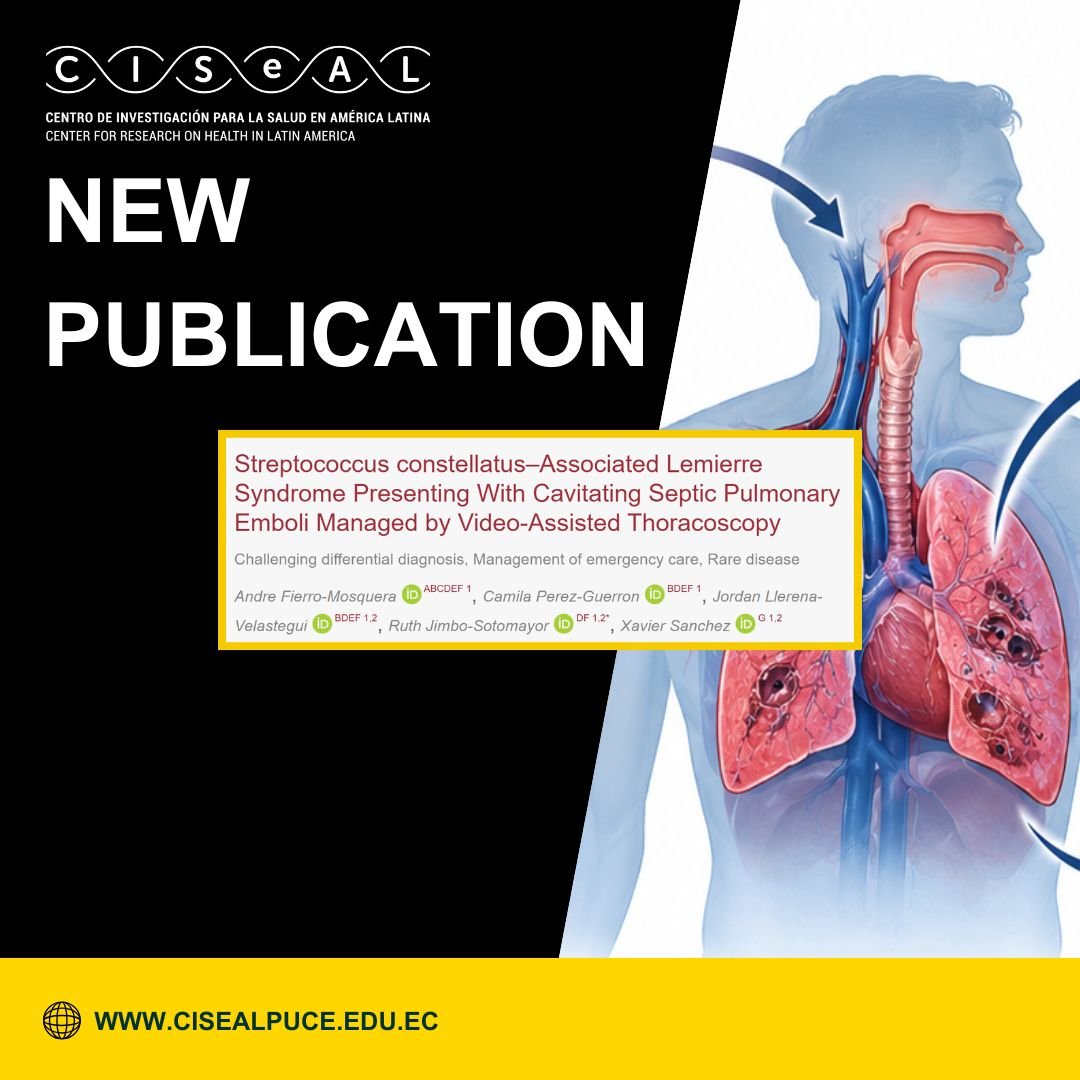
 Lemierre's syndrome is a rare and potentially serious infectious disease characterized by septic thrombophlebitis of the internal jugular vein and the dissemination of infectious emboli to other organs, primarily the lungs. In the article “Streptococcus constellatus–Associated Lemierre Syndrome Presenting With Cavitating Septic Pulmonary Emboli Managed by Video-Assisted Thoracoscopy,” with the participation of CISeAL researchers Jordan Llerena-Velastegui, Ruth Jimbo-Sotomayor, and Xavier Sánchez, alongside other experts from PUCE, the case is presented of a 25-year-old man, a resident of northern Ecuador with no relevant medical history, who developed a severe infection with respiratory distress, fever, productive cough, and hemoptysis. Imaging studies identified multiple cavitated pulmonary lesions compatible with septic emboli, while vascular evaluation confirmed thrombosis of the left internal jugular vein. Blood cultures identified Streptococcus constellatus, a bacterium belonging to the Streptococcus anginosus group, known for its ability to cause invasive infections and form abscesses. This finding is relevant because Lemierre's syndrome is classically associated with Fusobacterium necrophorum, meaning this case expands the understanding of the microorganisms that can be involved in this disease.
The patient required intensive care admission, mechanical ventilation, and intravenous antibiotic treatment. Due to the onset of an empyema and subsequently a pulmonary abscess, he underwent two video-assisted thoracoscopic surgery procedures for drainage and control of the infectious foci. Management was complemented by individualized anticoagulation and four weeks of intravenous antibiotic treatment, following which he showed a favorable evolution and resolution of symptoms during outpatient follow-up. The study highlights the importance of considering Lemierre's syndrome in patients with severe sepsis and cavitated pulmonary lesions, even when there are no evident manifestations of pharyngeal infection, as well as performing timely evaluations of the cervical venous circulation to identify the origin of the infection. Likewise, it highlights the need for a multidisciplinary approach combining microbiological diagnosis, antimicrobial treatment, and surgical control of complications. This report contributes to the knowledge of the clinical manifestations of Lemierre's syndrome associated with Streptococcus constellatus and emphasizes the importance of early recognition of rare invasive infections to guide treatment and promote patient recovery.
Did you know that Lemierre's syndrome can occur even without obvious symptoms of a throat infection and lead to severe pulmonary complications? Discover how this rare case was diagnosed and treated in the full article: