


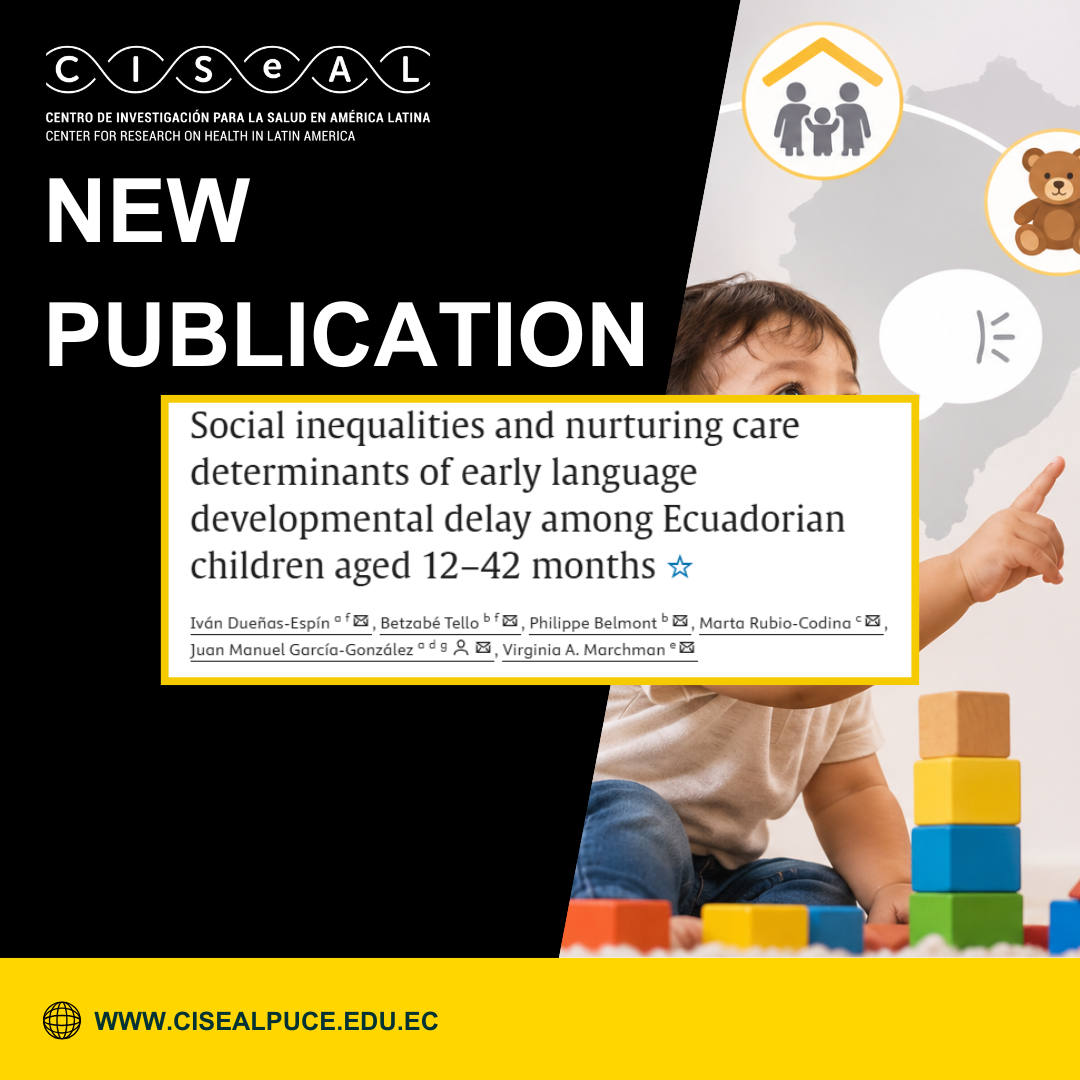
 The study “Social inequalities and nurturing care determinants of early language developmental delay among Ecuadorian children aged 12–42 months”, conducted as part of a research project on language development led by Dr. Betzabé Tello, a researcher at the Center for Research on Health in Latin America (CISeAL) at PUCE, examines the prevalence of early childhood language developmental delay in Ecuador and its associated factors. The research used data from the 2018 National Health and Nutrition Survey (ENSANUT), based on a representative sample of 8,446 children aged 12 to 42 months. The results showed that 14.5% of the children assessed had language developmental delay, equivalent to approximately one in seven children. Factors associated with a higher likelihood of delay included preterm birth, male sex, increasing age, and greater daily screen exposure.
In contrast, households offering greater opportunities for stimulation, the availability of children's books, and play involving at least three different types of toys were associated with lower odds of language developmental delay. Likewise, although socioeconomic inequalities showed associations in the initial analyses, these were no longer statistically significant after accounting for other factors related to caregiving and stimulation at home. These findings highlight the importance of strengthening nurturing environments, promoting shared reading, play, and interactions between caregivers and children, as well as encouraging healthy screen-use habits from an early age. This research provides nationally representative evidence that can contribute to the development of public health strategies aimed at promoting child development and reducing inequalities in learning opportunities during the first years of life.
Did you know that small everyday activities, such as sharing a book or playing with children, can make a difference in their language development? We invite you to explore these findings and read the full article at: