


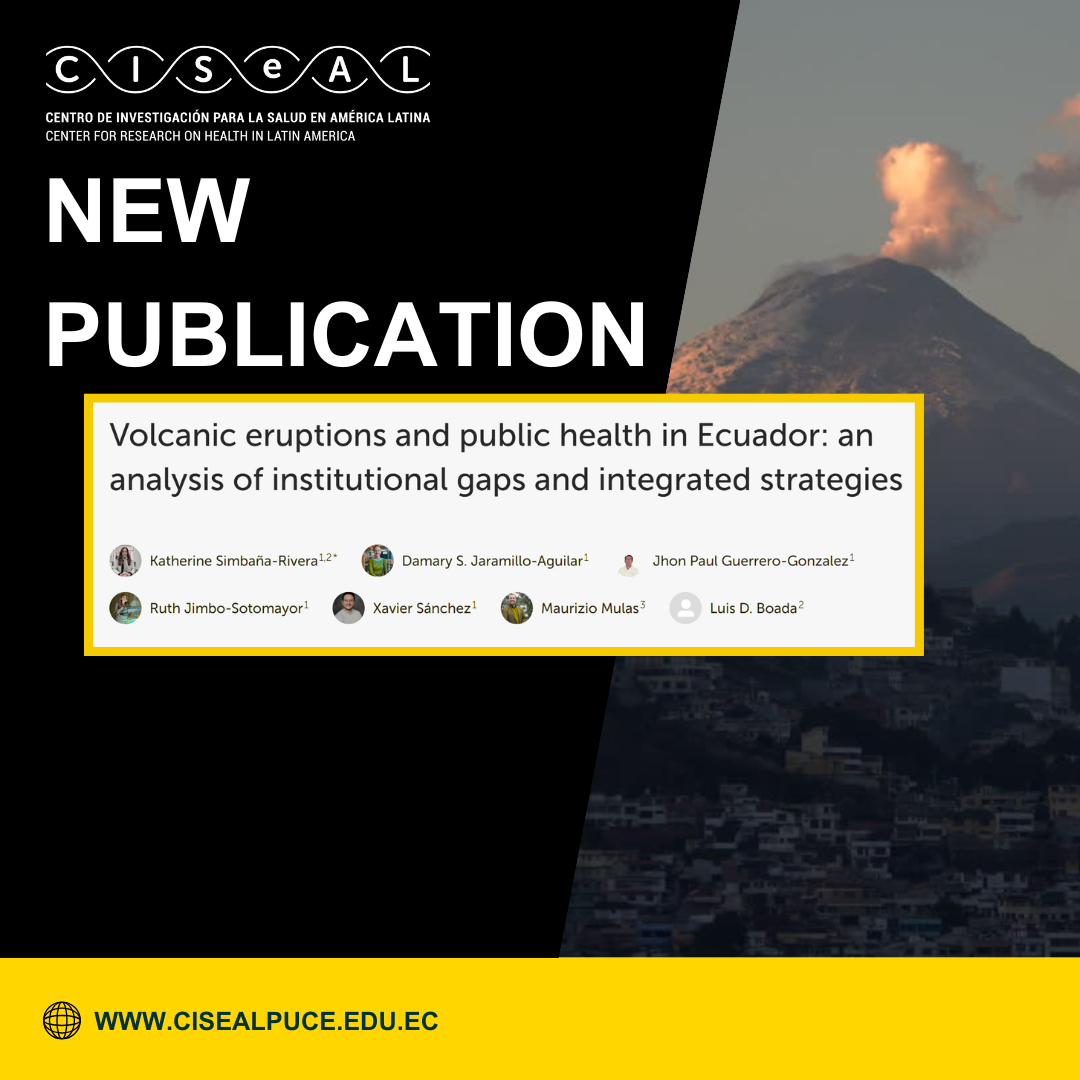
 The article, led by Katherine Simbaña-Rivera and developed with the support of Damary S. Jaramillo-Aguilar, Ruth Jimbo-Sotomayor, Jhon Paul Guerrero-Gonzalez, and Xavier Sánchez, researchers from CISeAL, together with other experts, analyzes the preparedness and response of Ecuador’s health system to volcanic activity occurring between 2000 and 2024, in a country characterized by high exposure to this type of natural hazard. Based on an exhaustive documentary review of institutional, regulatory, scientific, and grey literature sources, the study examines the main eruptive events recorded at the Tungurahua, Cotopaxi, Sangay, and Reventador volcanoes, as well as the health impacts and the actions implemented by the institutions responsible for risk management and public health.
The analysis shows that volcanic eruptions have generated significant effects on the health of exposed populations, including respiratory, ocular, dermatological, gastrointestinal, and psychosocial conditions, in addition to indirect impacts associated with contamination of water sources, food insecurity, disruption of basic services, and impacts on livelihoods. Although the country has consolidated technical capacities for volcanic monitoring and a regulatory framework that recognizes risk management as an essential component of population well-being, significant gaps persist in integrating this information into health planning, post-event epidemiological surveillance, and the systematic evaluation of implemented interventions.
The study identifies that the health sector response has been predominantly reactive and short-term, with limited institutionalization of prevention and preparedness for volcanic emergencies, as well as weaknesses in intersectoral coordination and in the incorporation of equity-based approaches, particularly with regard to rural and Indigenous populations and other vulnerable groups. It also highlights the absence of robust systems for monitoring chronic effects associated with prolonged exposure to volcanic ash and the insufficient incorporation of sustained mental health care strategies, which limits the health system’s capacity to respond comprehensively to this type of risk.
Would you like to learn more?
We invite you to read the full article at:
https://doi.org/10.3389/fpubh.2025.1705862