


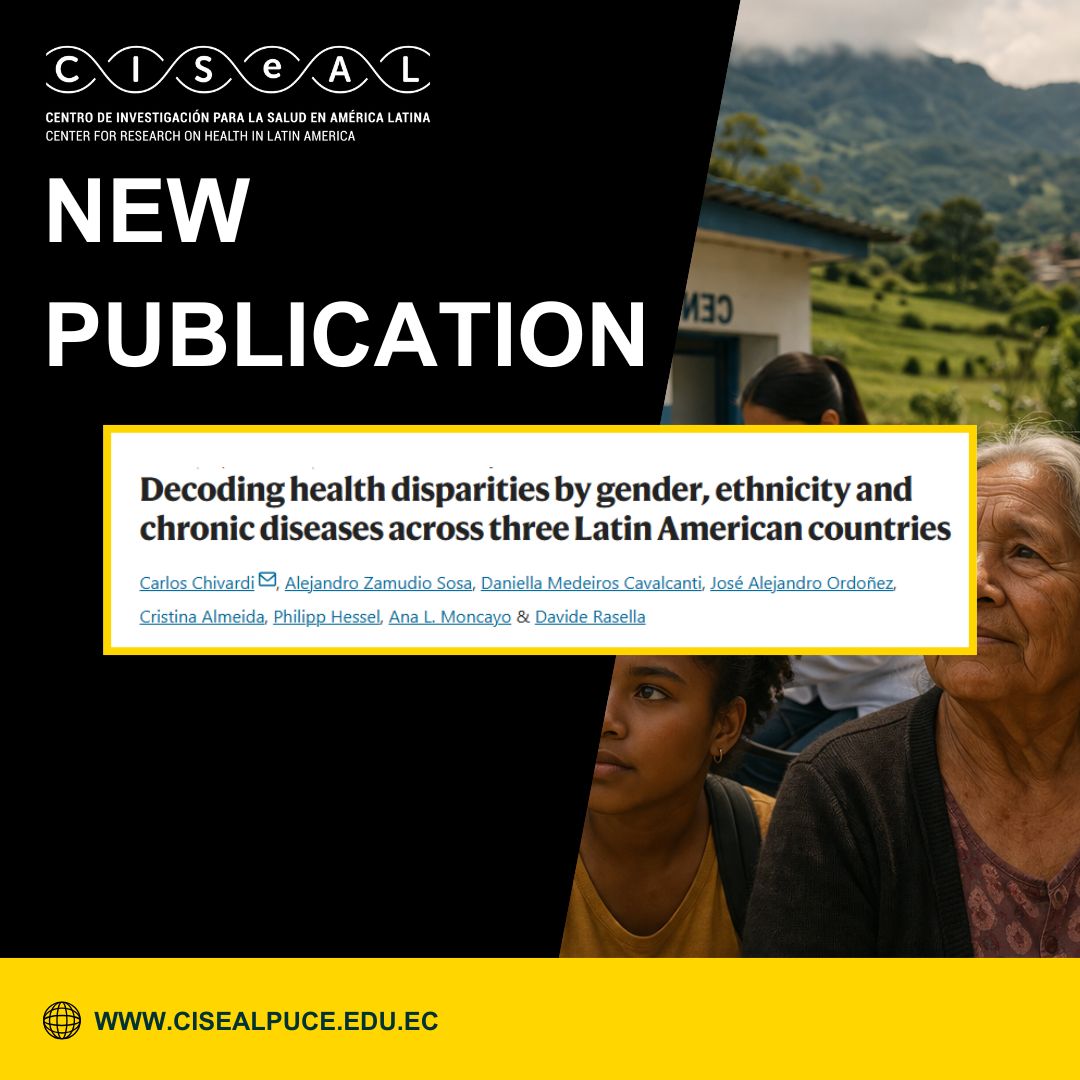
 The analysis of health inequalities in Latin America requires going beyond biological differences and considering how social factors such as gender, ethnicity, and living conditions jointly shape health outcomes. In this context, the study in which our CISeAL principal investigator, Dr. Ana Lucía Moncayo, participates takes a comprehensive approach to examining the relationship between social determinants and the presence of chronic diseases in Brazil, Ecuador, and Mexico. It uses machine learning models to identify complex and non-linear patterns that often go unnoticed in traditional approaches. The findings show that variables such as occupation and education play a central role, although with differentiated effects by gender: occupation is more determinant in men, possibly due to its relationship with economic stability and the social role of provider, while education has a greater impact on women, being associated with self-care practices, greater health awareness, and more frequent use of medical services.
The study also confirms that Indigenous and Afro-descendant populations face more unfavorable structural conditions and exhibit more complex interactions among social determinants, increasing their vulnerability to chronic diseases. A particularly relevant aspect is that, in some cases, higher levels of education or better access to basic services are associated with a greater likelihood of diagnosis, suggesting that these variables may reflect improved access to detection and care rather than an actual increase in disease prevalence. Likewise, important differences are identified between countries and ethnic groups in the influence of factors such as access to water, sanitation, and working conditions, which are especially critical in Indigenous populations. Overall, the study highlights that health inequalities must be understood as the result of multiple interconnected factors that operate differently depending on social, ethnic, and gender contexts, and underscores the need to design targeted public policies that strengthen education for women, improve working conditions for men, and address the structural gaps affecting historically vulnerable groups.
To what extent are current health policies in Latin America truly considering these complex interactions between gender, ethnicity, and social conditions in order to reduce inequalities in chronic diseases?
Read the full article here: https://www.nature.com/articles/s41467-025-67564-0