


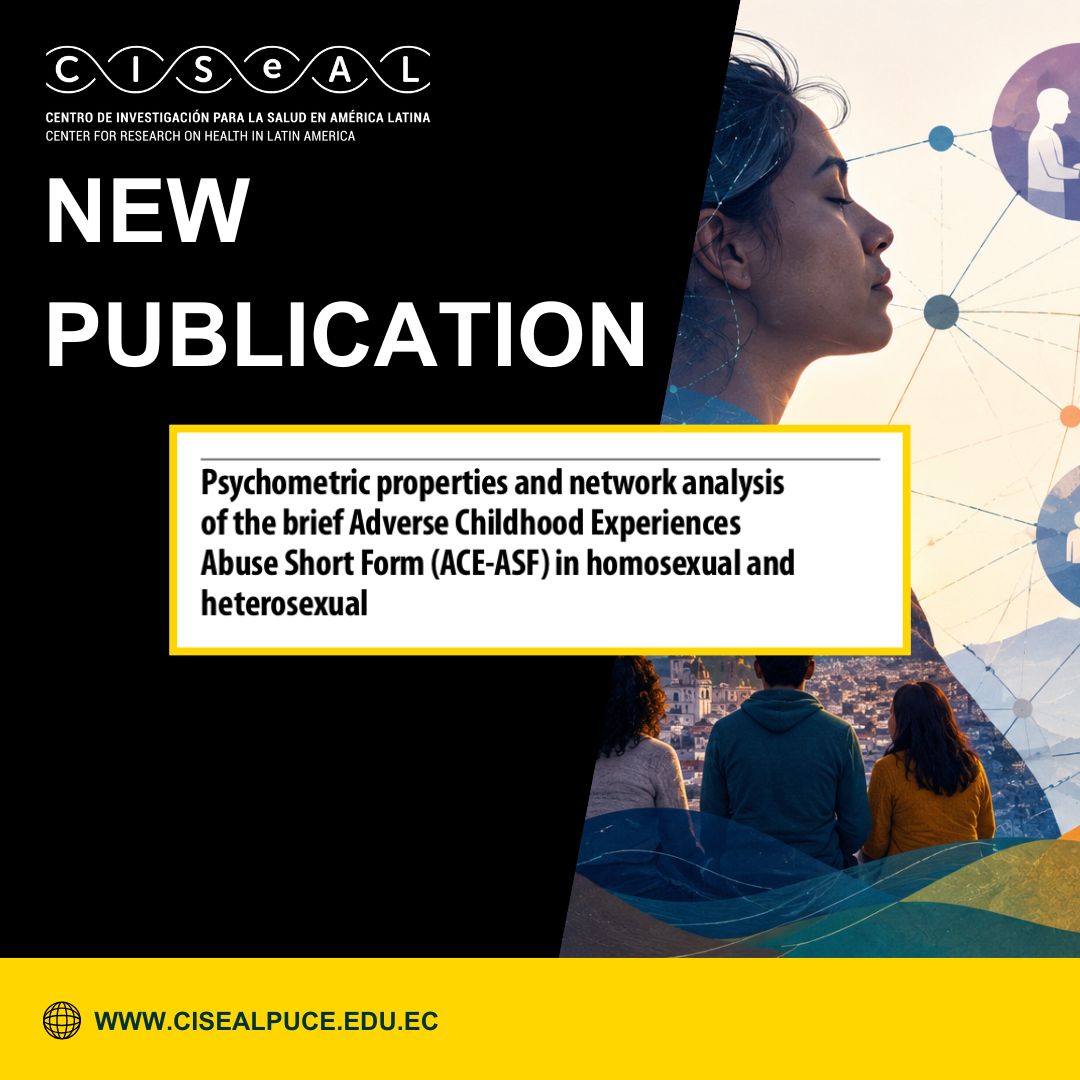
 Dr. Venus Medina Maldonado participated in a study that evaluated the psychometric properties and relational structure of the Brief Adverse Childhood Experiences Abuse Short Form (ACE-ASF) among homosexual and heterosexual individuals in Ecuador. The study included 520 participants and aimed to determine whether this instrument reliably and validly measures experiences of physical, emotional, and sexual abuse during childhood, as well as to explore how these experiences are associated with the perception of abuse in intimate relationships during adulthood.
The results demonstrated that the ACE-ASF has high internal consistency and a structure composed of two clearly defined dimensions: physical-emotional abuse and sexual abuse. Furthermore, the instrument was found to maintain its validity and stability regardless of sexual orientation and variables related to the perception of abuse, such as feeling afraid, feeling trapped, or perceiving oneself as being abused in a relationship. These findings support the use of the scale as a robust tool for assessing traumatic experiences across different contexts and populations.
Through network analysis, the researchers identified distinct patterns between homosexual and heterosexual individuals, observing that adverse childhood experiences are not organized in the same way across all groups. The networks corresponding to homosexual participants showed greater interconnectedness among the different types of abuse, while specific structures were identified for gay men, lesbian women, and heterosexual individuals. Likewise, perceptions of fear, feeling trapped, and feeling abused were found to be closely associated with one another and with early experiences of abuse, highlighting the central role that certain childhood events play in the way individuals interpret and experience intimate relationships during adulthood.
This study provides scientific evidence supporting the validation of the ACE-ASF in the Ecuadorian context and offers relevant information for the development of prevention and intervention strategies aimed at mitigating the long-term consequences of childhood abuse. In addition, it contributes to a better understanding of how early adverse experiences may influence relationship dynamics and the perception of abuse across different population groups.
Do experiences of childhood abuse leave different long-term effects depending on sexual orientation and the way individuals perceive their relationships in adulthood?
Read the full findings in the article: https://doi.org/10.1186/s40359-026-04907-6