


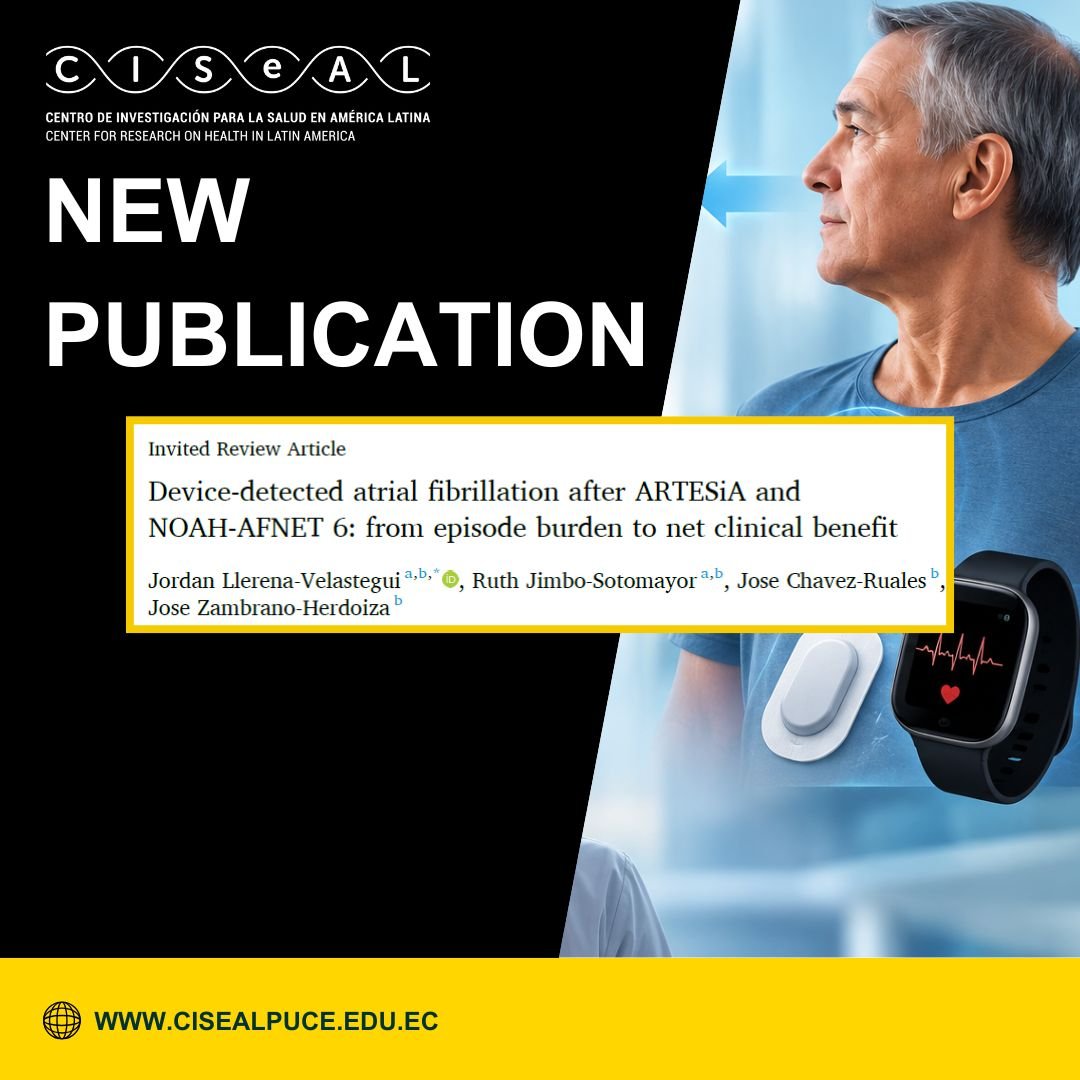
 Device-detected atrial fibrillation has become a major challenge for clinical practice, because episodes identified by cardiac devices can be asymptomatic and do not necessarily equate to clinically diagnosed atrial fibrillation. In this context, the study analyzes evidence from the ARTESiA and NOAH-AFNET 6 trials to evaluate the benefits and risks of anticoagulation in patients with subclinical atrial fibrillation. The results show that direct oral anticoagulants can decrease the risk of ischemic stroke, but they also increase the probability of major bleeding; therefore, the decision to initiate treatment must consider each patient's individual risk rather than solely the duration or frequency of the detected episodes. ARTESiA demonstrated a reduction in strokes or systemic embolisms with apixaban compared to aspirin, whereas NOAH-AFNET 6 did not find a significant reduction in its composite cardiovascular endpoint with edoxaban and recorded a higher risk of death or major bleeding. Together, these results show that the risk of stroke in patients with device-detected atrial fibrillation tends to be relatively low, while the benefit of anticoagulation can vary considerably among individuals. For this reason, the authors emphasize the importance of first confirming that the detected episode truly corresponds to atrial fibrillation, analyzing its characteristics and evolution, assessing history such as stroke or transient ischemic attack, vascular disease, heart failure, and renal function, in addition to considering bleeding risk and each patient's preferences.
The study also points out that the six minutes used as an inclusion criterion in the trials should not be interpreted as a universal threshold for initiating anticoagulation, since there is currently no duration or burden of atrial fibrillation that determines the need for treatment on its own. Likewise, because episodes can increase in frequency or duration and progress to clinical atrial fibrillation, the importance of follow-up and periodic reassessment is highlighted. Based on this evidence, the authors propose a net clinical benefit approach that seeks to balance the risk of thromboembolic events against the bleeding risk, incorporating both scientific evidence as well as clinical characteristics and patient preferences. This proposal is conceptual and still requires validation, but it presents a perspective oriented toward individualized therapeutic decisions. The work features the participation of CISeAL researchers Jordan Llerena-Velastegui and Ruth Jimbo-Sotomayor, alongside other experts, and contributes to the analysis of a relevant issue for decision-making in health.
A striking fact: the analyzed trials show that in patients with device-detected atrial fibrillation, the risk of stroke without anticoagulation is around 1% per year. However, although anticoagulants can reduce ischemic strokes, they also increase the risk of major bleeding. This demonstrates that the decision to treat does not depend solely on detecting an episode of atrial fibrillation, but on finding a balance between its potential benefits and risks.
Learn more about this research and review the full article at the following link:
[https://www.sciencedirect.com/science/article/abs/pii/S0146280626001714](https://www.sciencedirect.com/science/article/abs/pii/S0146280626001714)