


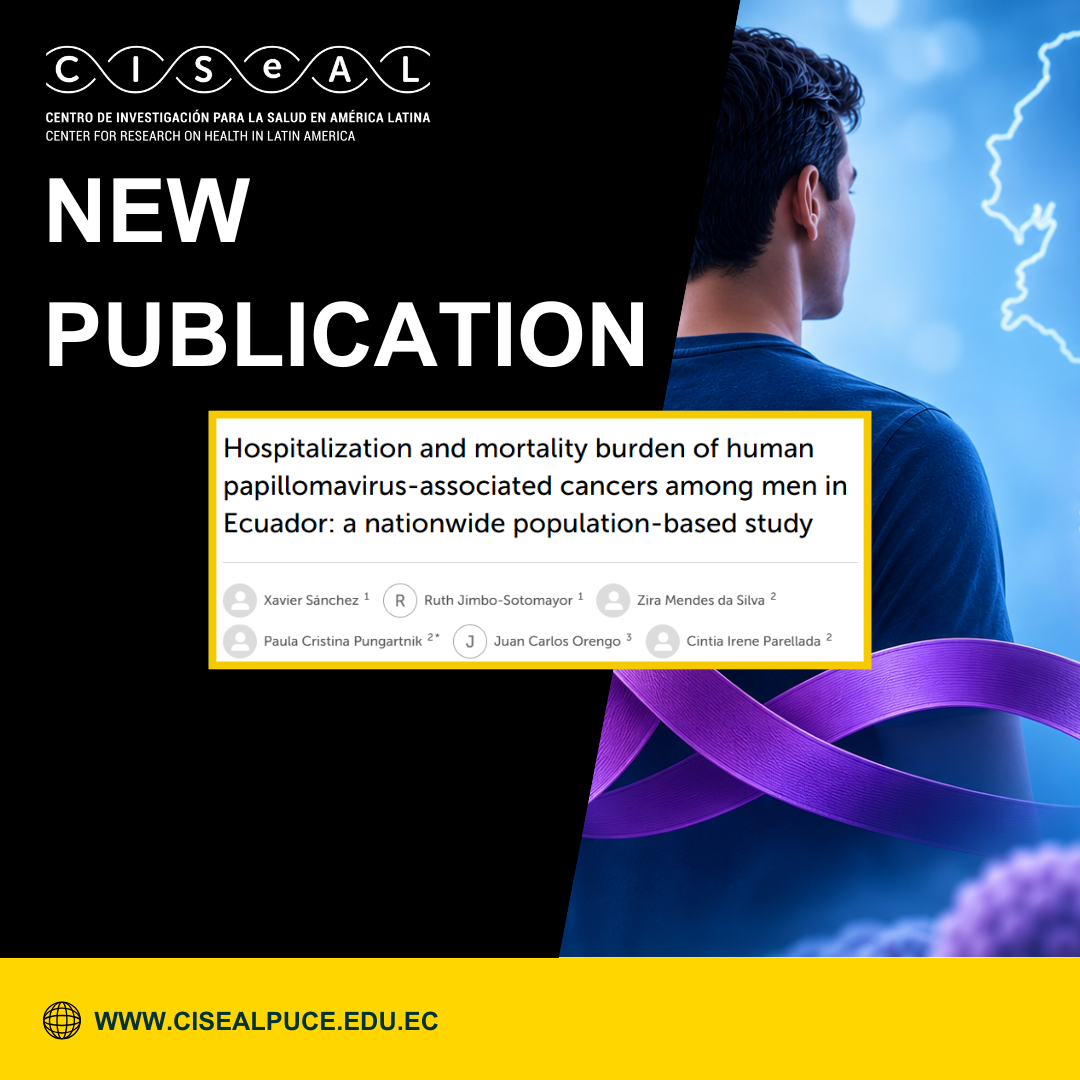
 Human papillomavirus (HPV) represents a major public health problem among men as well, due to its association with various types of cancer, including penile, anal, and head and neck cancers. Although many HPV infections disappear spontaneously, those that persist can favor the development of malignant diseases, the diagnosis of which is often limited by the absence of widely established early detection strategies for the male population. In this context, research conducted by our CISeAL researchers, Xavier Sánchez and Ruth Jimbo-Sotomayor, alongside other experts, analyzed the burden of hospitalizations and mortality associated with these types of cancer in men in Ecuador during the 2015–2019 period, by analyzing national databases from the National Institute of Statistics and Censuses (INEC). The results identified 3,442 hospitalizations and 575 deaths related to HPV-associated cancers during the five years studied, representing an approximate annual average of 688 hospitalizations and 115 deaths. Head and neck cancers accounted for the highest proportion of hospitalizations (66.4%) and deaths (71.1%), while penile cancer stood out for its contribution to the estimated burden of diseases directly attributable to the virus. By applying HPV attribution percentages established in previous research, the authors estimated that 1,002 hospitalizations (29.1%) and 134 deaths (23.3%) could be attributed to this virus.
Likewise, it was observed that men aged 60 and older accounted for 54.3% of hospitalizations and 72.7% of deaths; however, a significant proportion of anal, penile, and oropharyngeal cancer cases also occurred in men under 60, demonstrating that this problem affects different stages of adult life. These findings acquire special relevance considering that Ecuador incorporated nine-year-old boys into the national HPV vaccination program in 2024, ten years after its implementation for girls. By providing a national baseline prior to this incorporation, the study constitutes a contribution to evaluating the future impact of inclusive vaccination policies, strengthening epidemiological surveillance, and guiding cancer prevention and care strategies. The researchers emphasize that achieving high and equitable vaccination coverage, alongside timely diagnosis, appropriate treatment, and access to specialized health services, will be essential to reduce the burden of these cancers in the male population. However, the results must be interpreted considering that hospitalizations correspond to discharge events and not necessarily to individual patients, and that estimates of HPV-attributable diseases were calculated using previously published percentages rather than direct identification of the virus in each tumor. Overall, this research provides national evidence on an issue that requires greater attention in cancer prevention and public health strategies in Ecuador.
Did you know that Ecuador recorded a hospitalization rate for HPV-associated cancers higher than that reported in Peru and Mexico during the studied period? Discover this and other findings in the full scientific article by following this link: