


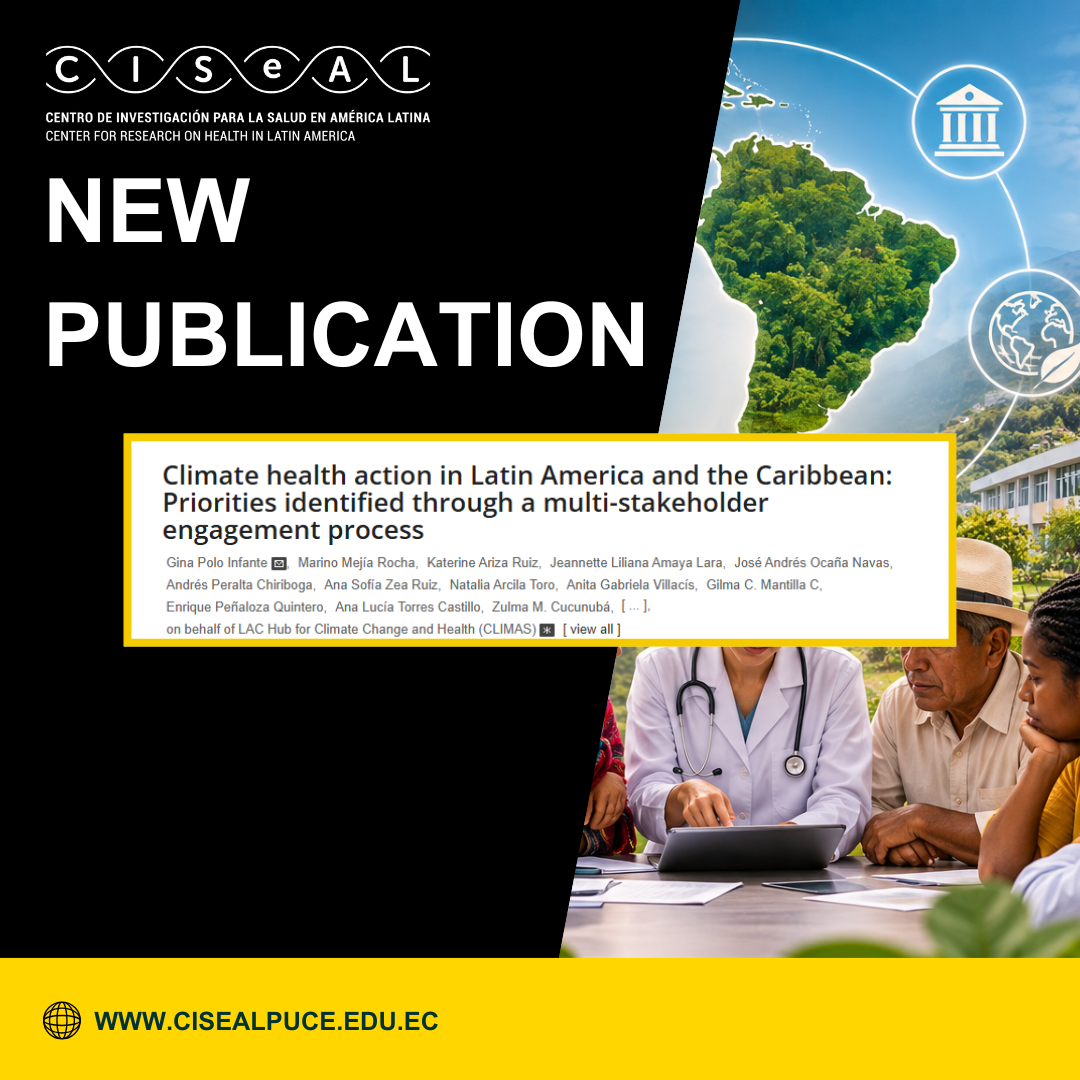
 Climate change represents one of the main public health challenges in Latin America and the Caribbean, a region especially vulnerable to phenomena such as heatwaves, floods, droughts, and hurricanes, despite its low contribution to global greenhouse gas emissions. These events intensify health risks and deepen existing inequalities, disproportionately affecting indigenous peoples, Afro-descendant communities, rural populations, women, older adults, and people with chronic illnesses. Facing this scenario, the study “Climate health action in Latin America and the Caribbean: Priorities identified through a multi-stakeholder engagement process”, with the participation of CISeAL principal researcher Dr. Anita Villacís, identifies and establishes priorities to strengthen the response of health systems to the effects of climate change in the region. The research employed a participatory methodology integrating qualitative and quantitative components through two phases of virtual workshops with representatives from academia, governments, civil society organizations, and communities.
The analysis was organized into three axes: healthcare workforce training, public policies and governance, and the availability, modeling, and accessibility of climate and health-related data. Among the main results, insufficient training and continuous education of healthcare personnel was identified as the most important priority in the first axis, while deficiencies in governance and interinstitutional coordination, alongside funding restrictions, represent the greatest obstacles to the implementation of public policies. Regarding information systems, problems with data quality and availability stood out, as well as limited coordination among the institutions that generate them. The study also shows that these difficulties are closely interrelated and that their impact worsens when adaptation strategies do not incorporate criteria of equity and social inclusion. Therefore, the authors emphasize the need to strengthen the capacities of health personnel, improve coordination between sectors, guarantee sustainable resources, and develop integrated information systems that allow for timely, evidence-based decision-making. Likewise, they underscore the importance of incorporating the knowledge and needs of the most vulnerable communities into the formulation of climate and health strategies. Although the results offer a relevant regional perspective, the researchers acknowledge that participation was primarily concentrated in academic and urban institutions in Latin America, especially Colombia, meaning further studies are required to integrate greater representation from rural communities, indigenous peoples, and Caribbean countries. This research provides elements to understand the institutional, technical, and social challenges facing the region and highlights that addressing the health effects of climate change requires coordinated, sustainable actions oriented toward reducing inequalities.
What actions can we drive from research, institutions, and communities to build more resilient health systems in the face of climate change?
We invite you to discover more about the results and priorities identified in this study. Read the full article at: