


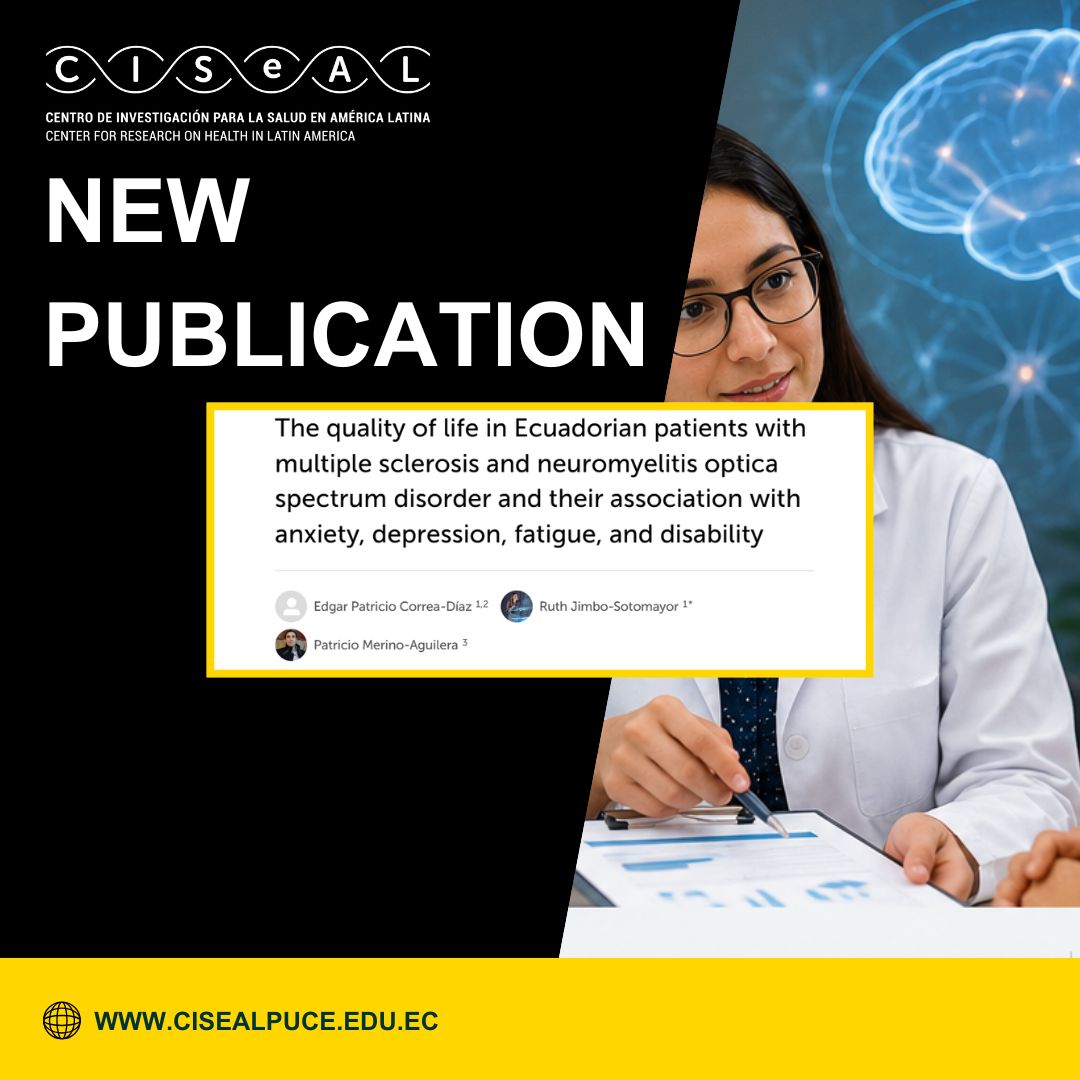
 The following study analyzed health-related quality of life in Ecuadorian patients with multiple sclerosis (MS) and neuromyelitis optica spectrum disorder (NMOSD), as well as its association with anxiety, depression, fatigue, and disability. The research was conducted at Hospital Carlos Andrade Marín between March and June 2025 and included 151 patients, of whom 117 had MS and 34 had NMOSD. The study involved the participation of CISeAL researcher Ruth Jimbo-Sotomayor. The results showed that patients with NMOSD had a significantly more impaired quality of life compared to patients with MS, particularly in the physical and mental components assessed using the MSQOL-54 scale. The most affected domains were physical and emotional limitations, pain, social functioning, and sexual functioning. Furthermore, the study demonstrated that neurological disability was considerably greater in patients with NMOSD, who presented higher EDSS scores, confirming the more disabling nature of this disease compared to multiple sclerosis. In both groups, females and the mestizo population predominated, a relevant finding within the Latin American epidemiological context.
The analysis also revealed a high frequency of anxiety and depression in both diseases, although with greater severity among patients with NMOSD. While mild anxiety predominated in MS, moderate and severe cases were more frequent in NMOSD. Similarly, depression occurred more frequently in NMOSD, mainly at mild and moderate levels. A significant negative correlation was identified between anxiety and depression levels and quality of life, indicating that emotional deterioration directly impacts patients’ physical and mental well-being. In addition, disability showed an inverse relationship with quality of life, especially in the physical component, reaffirming that disease progression affects the functionality and autonomy of affected individuals. Fatigue was also associated with lower quality of life in patients with MS, although this relationship was not significant in NMOSD.
The study highlights the importance of comprehensively evaluating both physical and psychological factors in chronic demyelinating diseases, especially in Latin American contexts where there is limited scientific evidence regarding these conditions. The findings provide valuable information for understanding how anxiety, depression, disability, and fatigue influence the perception of well-being among Ecuadorian patients with MS and NMOSD. In addition, the research underscores the need to strengthen multidisciplinary care strategies that include neurological, psychological, and social support in order to improve these patients’ quality of life. Finally, this work constitutes one of the first studies conducted in Ecuador on quality of life in NMOSD and provides relevant regional evidence for future research and the design of health interventions aimed at Latin American populations.
Learn more about this important study and how its findings contribute to the understanding of demyelinating diseases in Latin America by reading the full article at the following link:
https://www.frontiersin.org/journals/neurology/articles/10.3389/fneur.2026.1721735/full