


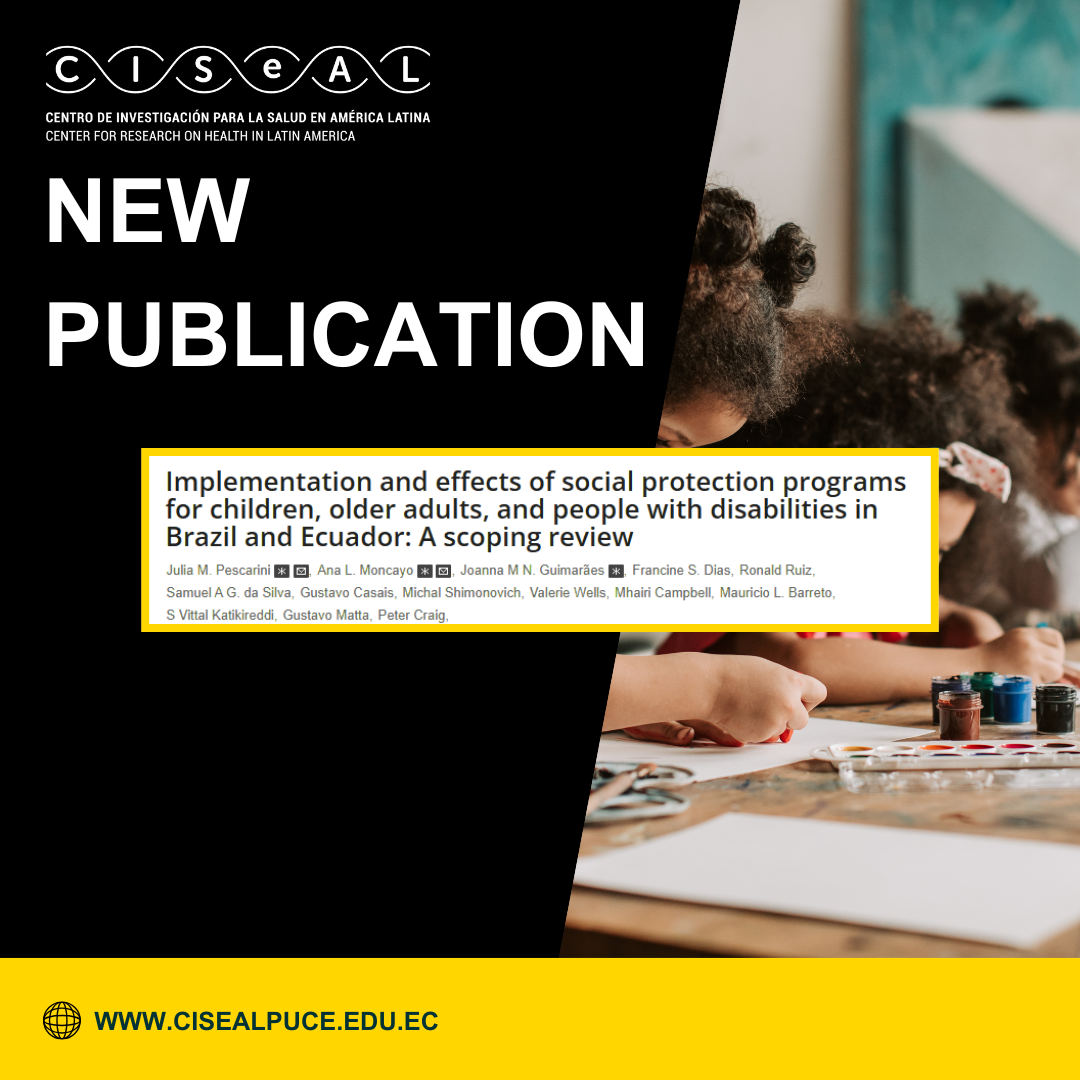
 Our Principal Investigator, Dr. Ana Lucía Moncayo, together with Dr. Julia M. Pescarini from the Center for Data and Knowledge Integration for Health (Cidacs) – Brazil, took part in a collaborative study in which they share both first and corresponding authorship. The article, published in PLOS Global Public Health, is titled “Implementation and effects of social protection programs for children, older adults, and people with disabilities in Brazil and Ecuador: A scoping review.”
This work is part of the SEDHI project (Social and Environmental Determinants of Health Inequalities) and examines how social protection programs targeting children, older adults, and people with disabilities living in poverty have been implemented and what their effects have been in Brazil and Ecuador. The review explores the link between poverty and health in Latin America, where long-standing inequality has driven the creation of policies such as Bolsa Família in Brazil and the Bono de Desarrollo Humano in Ecuador. These programs have helped reduce poverty and improve indicators of education, economic inclusion, and health, although coverage and sustainability gaps persist.
 The study represents the first report on the intestinal bacterial microbiota of Panstrongylus chinai, a secondary vector of Chagas disease in southern Ecuador. This research was conducted by the CISeAL team under the direction of Dr. Anita Villacís, with the objective of characterizing the microbial diversity present in the gut of this species and exploring its possible relationship with the transmission of Trypanosoma cruzi.
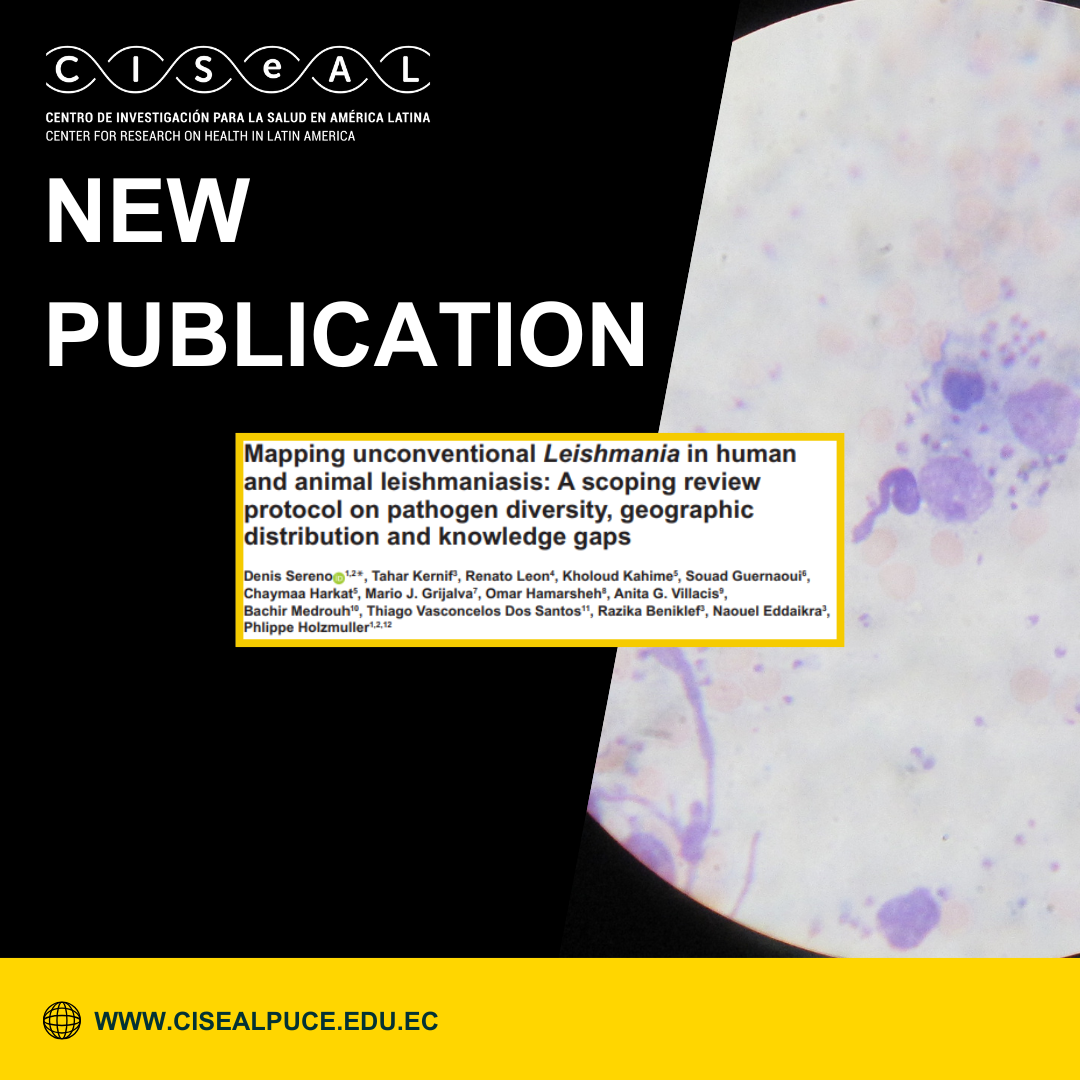 The research led by Dr. Denis Sereno, researcher at the IRD (Institut de Recherche pour le Développement), in collaboration with Dr. Mario Grijalva and Dr. Anita Villacís, principal investigators at CISeAL, addresses an emerging challenge in global public health: the diversity and behavior of non-conventional Leishmania species that cause infections in both humans and animals.
 After the COVID-19 pandemic, the city of Quito faced the enormous challenge of transforming its primary health care system, which had been weakened by the health emergency and hospital overload. The following study analyzes how the city reconfigured its model of Community Primary Health Care (CPHC) during and after the pandemic, becoming a regional reference in health resilience and local governance. Entitled “Strengthening primary health care resilience through community innovation: a qualitative case study from Quito’s response to COVID-19”, it was led by Dr. Betzabé Tello, principal researcher at CISeAL-PUCE, and received support from the World Bank as part of its technical assistance agenda to strengthen resilient primary health care systems in Latin America.
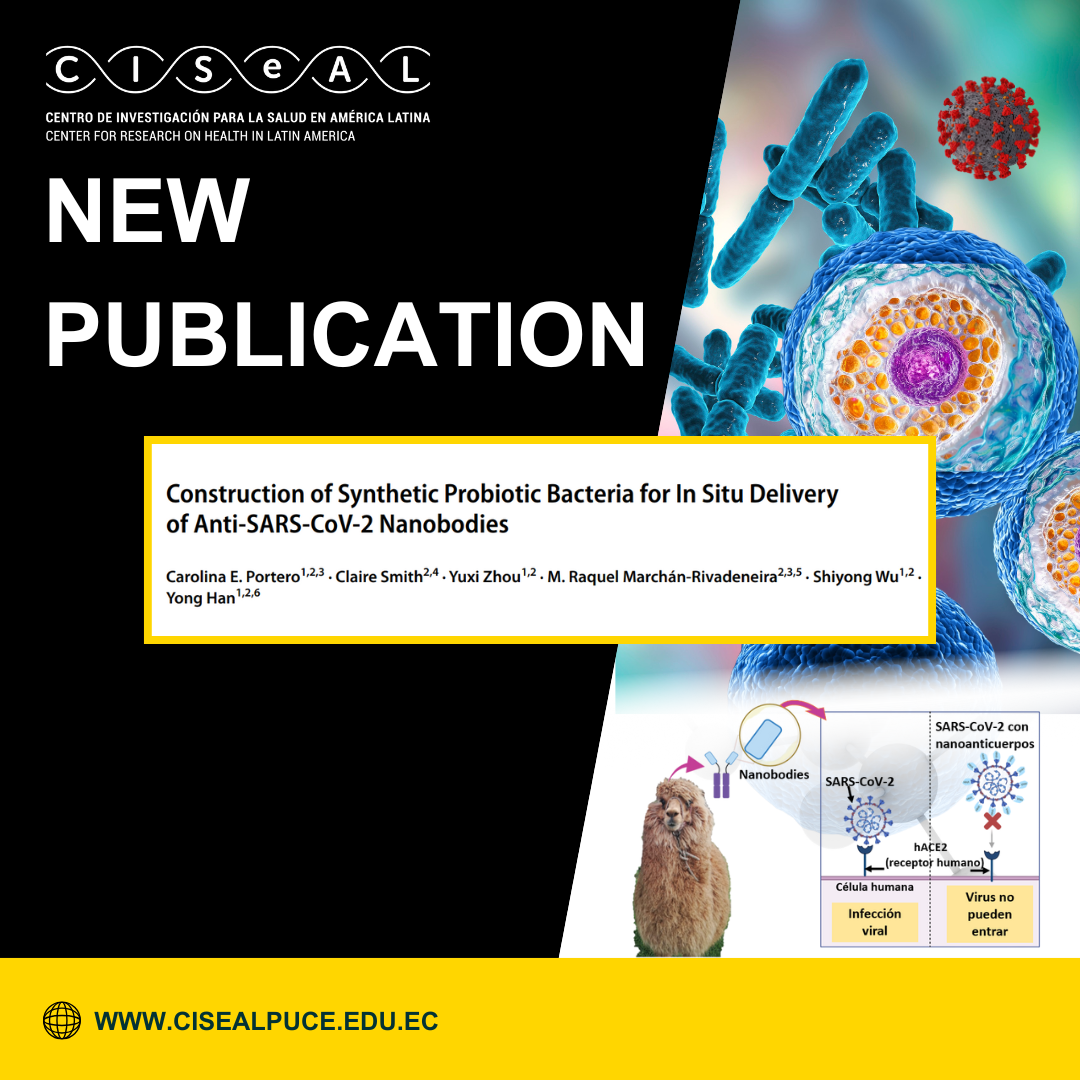
 The study conducted by Dr. Katherine Simbaña, Dr. Xavier Sánchez, and Dr. Ruth Jimbo Sotomayor, professors at the School of Medicine of PUCE and researchers at CISeAL, together with other experts, provides a global overview of the health effects of exposure to volcanic activity through a scoping review approach. The research is framed within a context where there are approximately 1,500 potentially active volcanoes worldwide, more than 550 of which have erupted in the past century, with a marked concentration in the Pacific Ring of Fire that runs through densely populated areas of Asia and the Americas. Volcanoes such as Fuego in Guatemala, Popocatépetl in Mexico, Tungurahua in Ecuador, and Merapi in Indonesia have produced highly explosive eruptions with major social and health consequences. The so-called “volcanic products,” which include ash, gases, pyroclastic flows, lava, and chronic emissions of pollutants such as carbon dioxide or radon, have differentiated health impacts depending on their physical and chemical properties, as well as on the duration and magnitude of exposure. In addition, external factors such as climate change, which intensifies secondary phenomena such as lahars or ash resuspension, and social determinants such as poverty, unplanned urbanization, and limited land-use planning significantly increase the vulnerability of populations living in high-risk areas.