


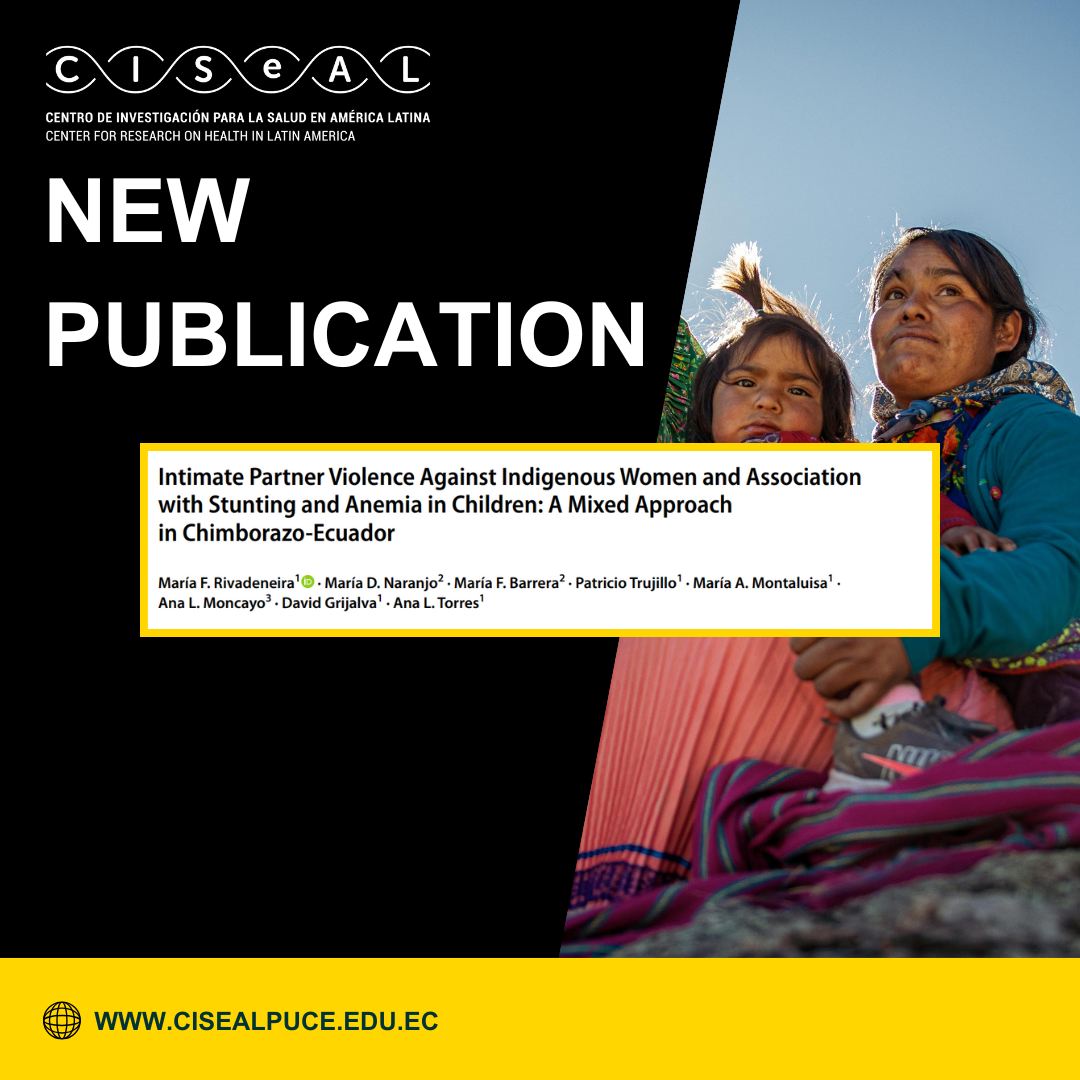
Dr. Ana Lucía Moncayo, principal investigator of CISeAL, participated in a study led by the Institute of Public Health of PUCE, which describes intimate partner violence against indigenous women and its association with stunting and anemia in children under five years of age in Chimborazo, Ecuador. Using a mixed-methods design, the researchers conducted a cross-sectional study involving 317 children and their mothers. Structured questionnaires were administered to collect information on partner abuse, socioeconomic characteristics, and alcohol consumption, complemented by anthropometric measurements and assessments of infant hemoglobin levels.
It was found that 31.5% of the women were victims of non-physical violence and 18% of physical violence. Moreover, the partner’s alcohol consumption at least twice a month was associated with a 4.2-fold higher likelihood of violence. The lack of basic services such as drinking water and sewerage significantly increased the prevalence of physical and non-physical violence in the households.
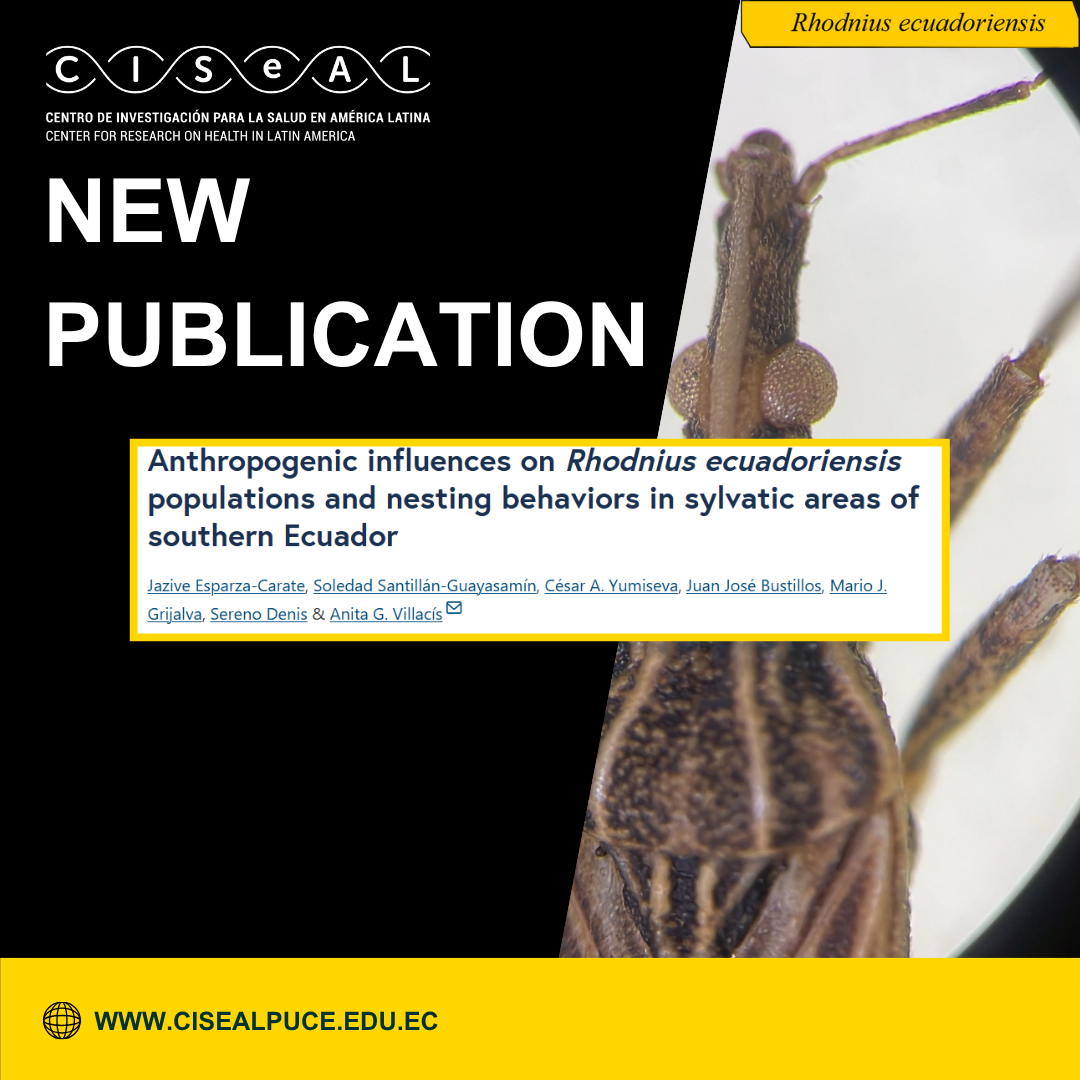 In her most recent publication, Dr. Anita G. Villacís, Principal Investigator at CISeAL, examines how environmental contamination influences the ecology of the
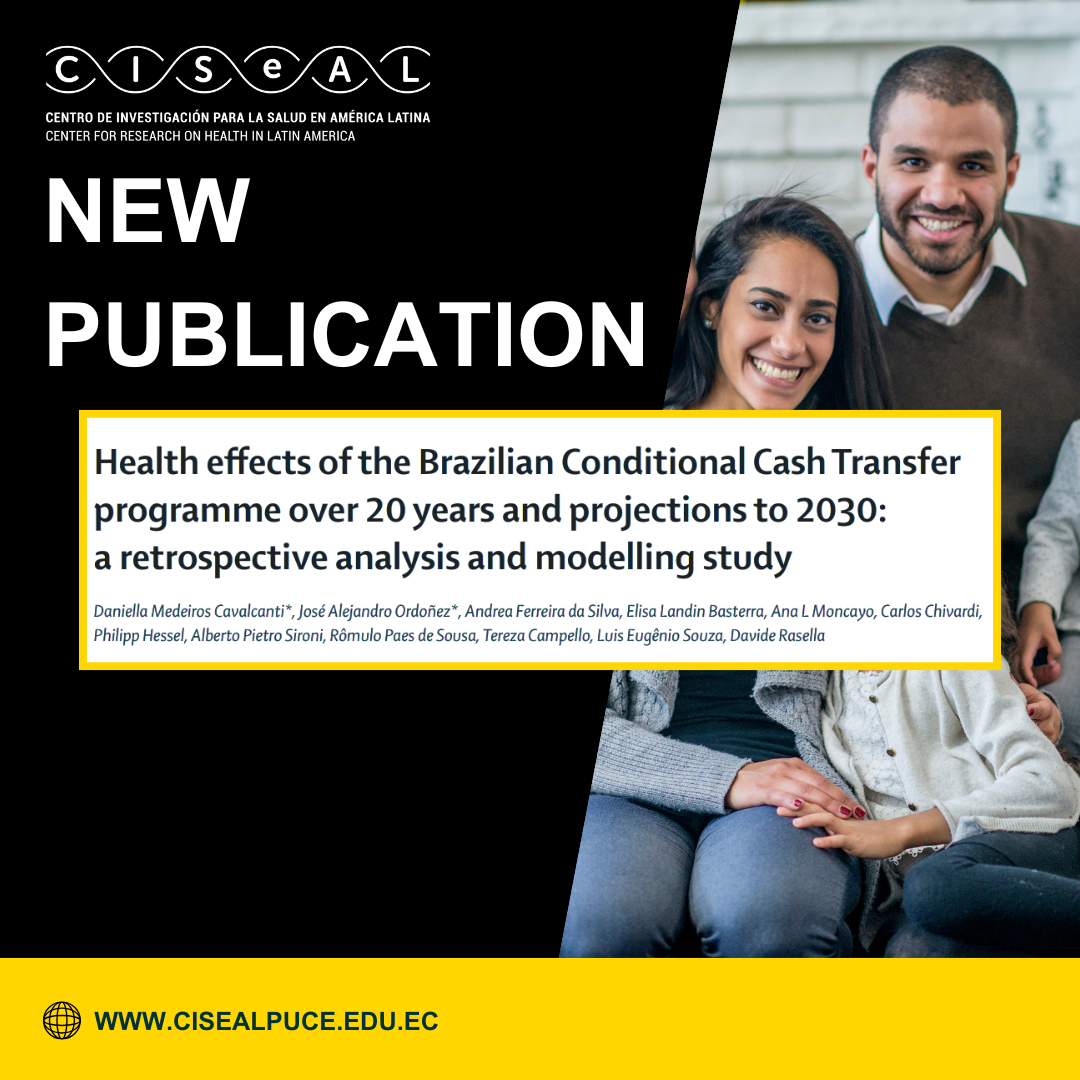 Published in The Lancet Global Health, one of the highest-impact scientific journals in the field of public health, this international study, with the participation of Dr. Ana Lucia Moncayo, principal investigator at CISeAL, analyzes the effects of the Bolsa Família Program (BFP) in Brazil on mortality and hospitalization over two decades, with projections up to 2030. The BFP, one of the largest and longest-running conditional cash transfer (CCT) programs in the world, has benefited more than 50 million people through monthly transfers subject to the fulfillment of key health and education indicators.
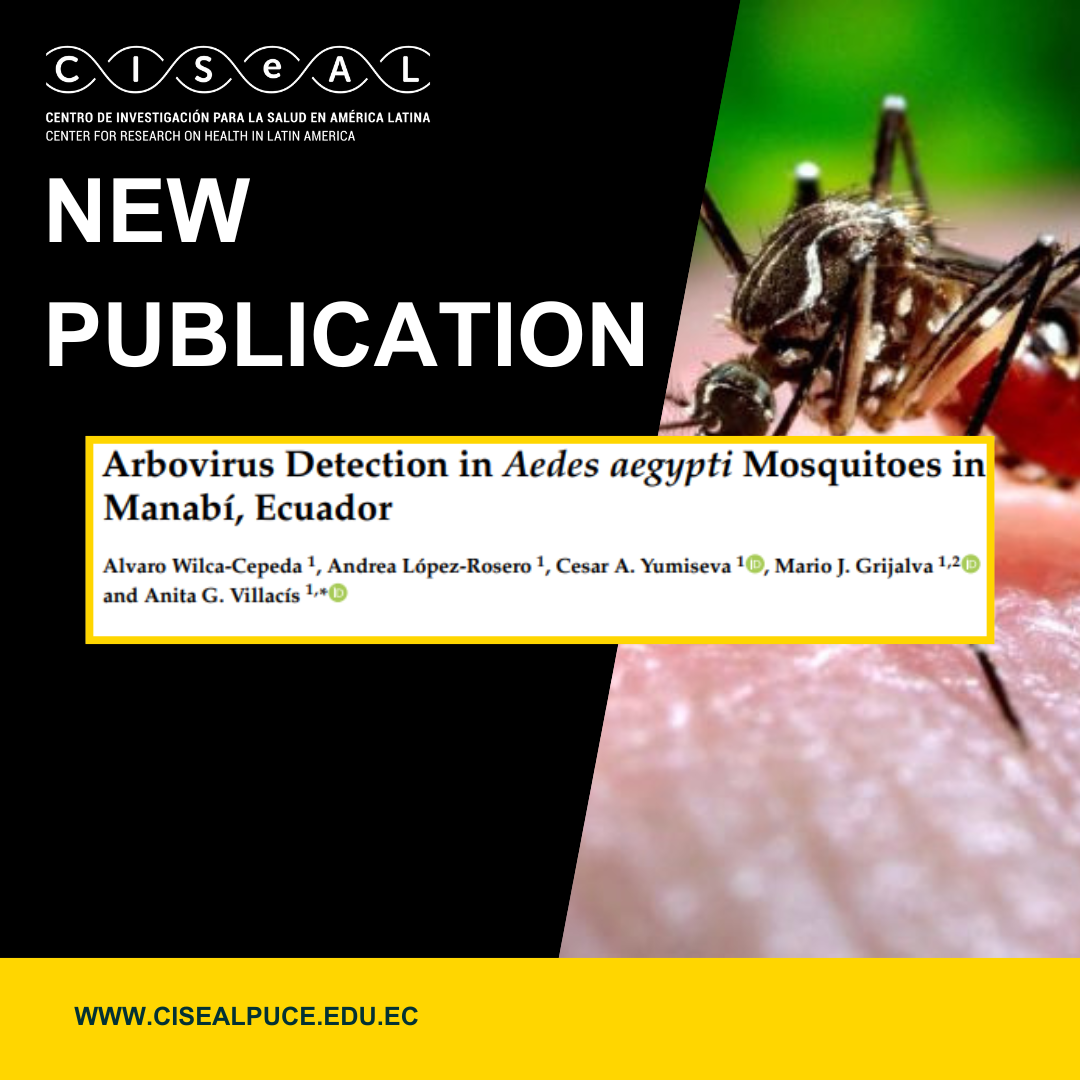 The article “Arbovirus Detection in Aedes aegypti Mosquitoes in Manabí, Ecuador” presents an investigation carried out in two communities in the province of Manabí—Caja Fuego (rural) and San Gregorio (marginal urban)—with the objective of detecting the presence of arboviruses in local populations of Aedes aegypti mosquitoes, a vector known for its role in the transmission of diseases such as dengue, Zika, and chikungunya. A total of 468 mosquitoes were collected, grouped into 72 pools, and transported under strict biosafety protocols to the laboratories of the Center for Health Research in Latin America (CISeAL), where they were processed using molecular techniques such as PCR, RT-PCR, and Sanger sequencing. This research featured the outstanding participation of Álvaro Wilca, under the direction of Dr. Anita G. Villacís, in collaboration with experts such as Dr. Mario L. Grijalva, Andréa López-Rosero, and Dr. Cesar A. Yumiseva, all of whom have significantly contributed to the study of vector-borne diseases in Ecuador.