CISeAL - PUCE
  • Home
  • About Us
    • Our History
    • Our Vision
    • Our Mission
    • Structure
      • Support Units
      • Organization chart
      • Infrastructure
    • Services
    • Directory
    • Work with us
      • Biodiversity Researcher
    • Gallery
  • Research
    • Researchers
      • Principal investigators
      • Associate Investigators
      • Adjunct Investigators
      • Visiting Researchers
    • Research groups
    • Research Areas at CISeAL
    • Collaborative Research
    • Healthy Living Initiative
    • Infectious and Chronic Diseases Information
    • Repository
  • Education
    • Internships at CISeAL Laboratories
    • Field Research and Service Learning Summer Experience
    • Scientific Congresses and Seminars
  • News
  • Contact
  • BIOSAG
    • 2026
      • Información General
      • Comité científico
      • Conferencistas Magistrales
      • Programa Científico
      • Postulación de Simposios
      • Postulación de Trabajos libres
      • Inscripciones
      • Apoyo Institucional
      • Auspicios
      • Contacto

Select your language

  • Español (España)
  • English (UK)
  1. You are here:  
  2. Home
  3. News

Ecuadorian biologists identify variations on the eggs of insects responsible for Chagas disease transmission

By Luis E. Mendoza

Foto 1 SSG 11 12

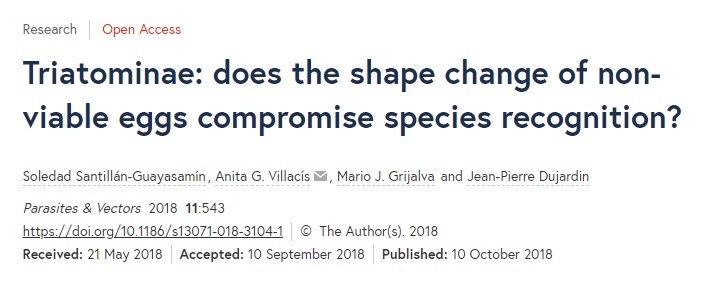
A recent research of the group of medical entomology from CISeAL, led by Dr. Anita Villacís, has just been published on Parasites & Vectors Journal (BioMed Central). The research (Triatominae: does the shape change of non-viable eggs compromise species recognition?) seeks to offer a new characterization of viable and non-viable eggs of four species of Ecuadorian Triatomines, insects responsible of the transmission of Chagas disease.

Read more …

Wawapak-kawsay, children's life

December 3, 2018


foto chimborazo2

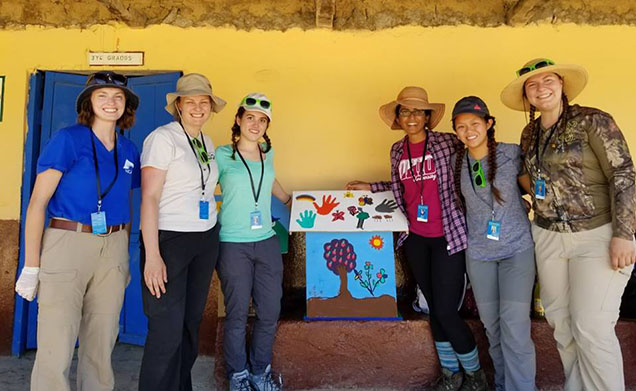
 PUCE students during field trip.

In a coordinated effort between the Public Health Institute, the Center for Research on Health in Latin America and the Nursing and Human Sciences Faculties form PUCE, last November 12 the team began the field work of the project: Determinants of malnutrition in children under 5 years of the Ecuadorian indigenous population; whose second phase will run until December 14, 2018 in five cantons of Chimborazo; Riobamba, Alausí, Guamote, Guano and Colta.

Read more …

Field work in Buenavista

November 29, 2018


Foto 10. Estudiantes de medicina de la UTMACH. Msc. Sofía Ocaña y Sarah Vaca. Buenavista El Oro

MSc. Sofía Ocaña and Sarah Vaca in company of UTMACH students.

From November 22th to 25th a field trip to the city of Machala was carried out, as part of the project: “Evaluation of the resistance to deltamethrin in natural populations of Anopheles albimanus, malaria vector, and its relationship with the use of pyrethroid insecticides in the southwestern coast of Ecuador”. The team led by MSc. Sofía Ocaña traveled to El Oro province and collaborated with students from UTMACH.

Read more …

Combating Chagas in Ecuador

Ecuadorian biologist directs projects against Chagas disease

By Luis E. Mendoza

Foto 1 noticias 5 oct

At Bellamaria community, Loja-Ecuador. Credits: Luis E. Mendoza, Ohio University

Despite that Chagas disease was discovered 100 years ago, there are still 8 million people who suffer from it. It is spread via contact with the feces of an insect called Trypanozoma cruzi, once the mosquito bite penetrates the human skin.

In 2005, the WHO classified Chagas disease as a neglected tropical disease. This means that it is a disease that proliferates in impoverished environments (as is the case in some rural areas of Ecuador), tropical climates and that has been historically ignored by the global health system. However, it is only in recent decades that scientific research has begun to focus on its study. "Chagas is a neglected disease and in order to close those gaps it is necessary to carry out research that generates knowledge that allows the development of better diagnoses, treatments and control strategies for the transmission" says Dr. Mario Grijalva, Director of the Center for Research on Health in Latin America.

Read more …

Ecuadorian biologist uses Extract of Silver and Ambrosia to control mosquito transmitter of Dengue, Zika and Chikungunya

June 26th, 2018

By Luis E. Mendoza

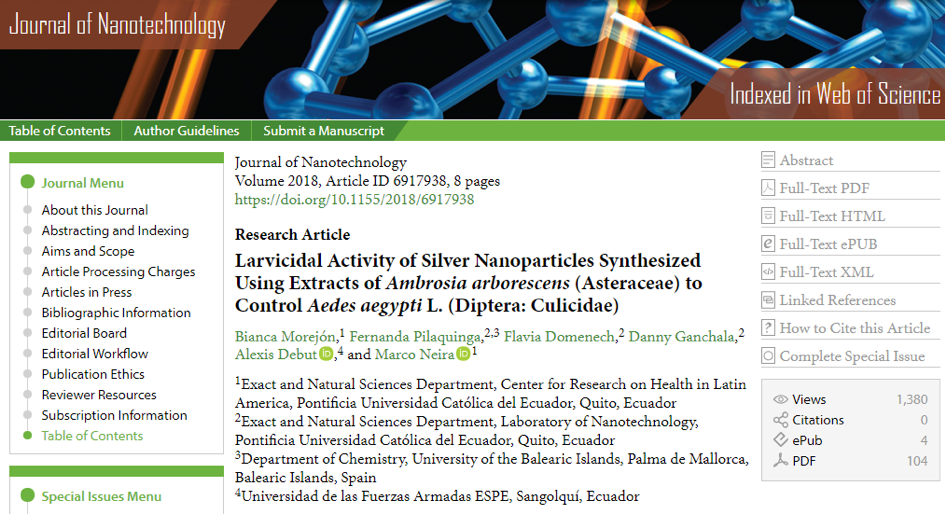
BiologaResearch published in Journal of Nanotechnology in April 18, 2018.

The Ambrosia is a plant with mythological resonance. The legend tells us that Greek and Sumerian gods used to drink it as a source of immortality. Moreover, the indigenous peoples of the inter-Andean valley -located in what we current know as Bolivia, Colombia, Ecuador and Peru- used it as part of their traditional medicine. Few people know, however, that this plant -combined with silver nanoparticles- contributes to control infectious diseases such as Dengue, Chikungunya and Zika. This is the outcome of research led by Ecuadorian biologist Bianca Morejón in the Center for Health Research in Latin America (CISeAL). This research was part of her thesis, conducted under the direction of Dr. Marco Neira.

Read more …

Helminthiases: "We propose the implementation of mass deworming control programs for children". Dr. Ana Moncayo interview

June 8th, 2018 

 By Luis E. Mendoza

ternuraTernura, 1989. Oswaldo Guayasamín.

Dr. Ana Moncayo, specialist in Public Health and Epidemiology, focuses her research on infectious diseases. She is a researcher at CISeAL and professor at PUCE. She has developed 14 investigations related to her area of ​​specialization so far. In the following interview, Dr. Moncayo tells us how her research on soil-transmitted infections could contribute to improving programs to control these infections and the impact of these parasites on the nutritional status of almost one and a half million school-age children in Ecuador.

Read more …

Page 16 of 17

  • 8
  • 9
  • 10
  • 11
  • 12
  • 13
  • 14
  • 15
  • 16
  • 17
  • Home
  • About Us
    • Our History
    • Our Vision
    • Our Mission
    • Structure
      • Support Units
      • Organization chart
      • Infrastructure
    • Services
    • Directory
    • Work with us
      • Biodiversity Researcher
    • Gallery
  • Research
    • Researchers
      • Principal investigators
      • Associate Investigators
      • Adjunct Investigators
      • Visiting Researchers
    • Research groups
    • Research Areas at CISeAL
    • Collaborative Research
    • Healthy Living Initiative
    • Infectious and Chronic Diseases Information
    • Repository
  • Education
    • Internships at CISeAL Laboratories
    • Field Research and Service Learning Summer Experience
    • Scientific Congresses and Seminars
  • News
  • Contact
  • BIOSAG
    • 2026
      • Información General
      • Comité científico
      • Conferencistas Magistrales
      • Programa Científico
      • Postulación de Simposios
      • Postulación de Trabajos libres
      • Inscripciones
      • Apoyo Institucional
      • Auspicios
      • Contacto
In Collaboration With Ohio University - Infectious and Tropical Disease Institute
PUCE
  • PUCE Research Office
  • School of Biological Sciences
  • Faculty of Exact and Natural Sciences - PUCE
  • School of Medicine
  • School of Nursing
Ohio University
  • Infectious and Tropical Disease Institute - Ohio University
  • STARS - Ohio University
  • Riding Against Chagas

PUCE | CISEAL
Copyright © 2026. CISeAL - PUCE.
  • Home
  • About Us
    • Our History
    • Our Vision
    • Our Mission
    • Structure
      • Support Units
      • Organization chart
      • Infrastructure
    • Services
    • Directory
    • Work with us
      • Biodiversity Researcher
    • Gallery
  • Research
    • Researchers
      • Principal investigators
      • Associate Investigators
      • Adjunct Investigators
      • Visiting Researchers
    • Research groups
    • Research Areas at CISeAL
    • Collaborative Research
    • Healthy Living Initiative
    • Infectious and Chronic Diseases Information
    • Repository
  • Education
    • Internships at CISeAL Laboratories
    • Field Research and Service Learning Summer Experience
    • Scientific Congresses and Seminars
  • News
  • Contact
  • BIOSAG
    • 2026
      • Información General
      • Comité científico
      • Conferencistas Magistrales
      • Programa Científico
      • Postulación de Simposios
      • Postulación de Trabajos libres
      • Inscripciones
      • Apoyo Institucional
      • Auspicios
      • Contacto